
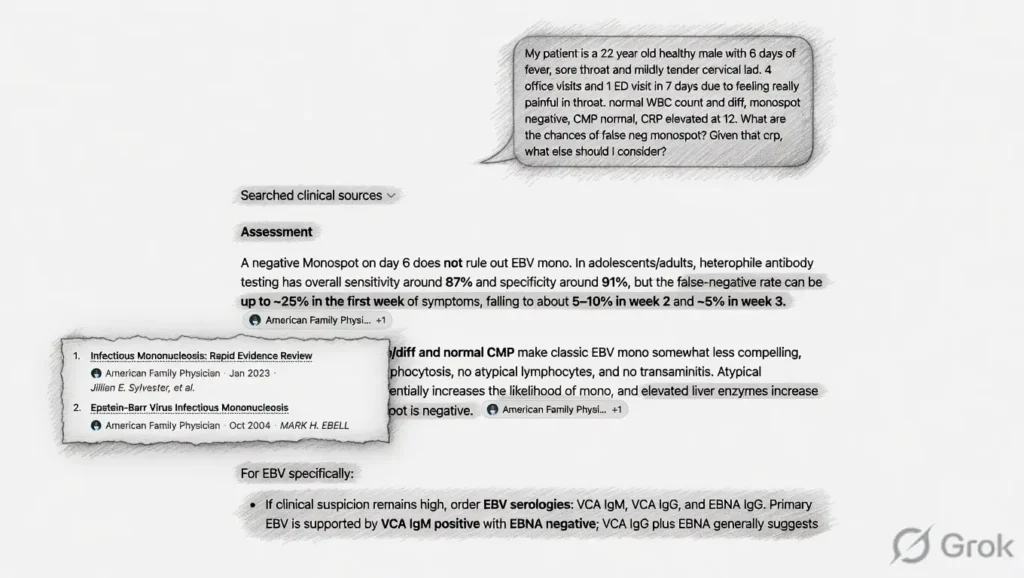
OpenAI has introduced ChatGPT for Clinicians, a dedicated free version available only to verified U.S. doctors, pharmacists, nurses, and other licensed healthcare providers.
This is not just another chatbot tweak. It brings specialized workflow tools, instant access to peer-reviewed research, and strict privacy safeguards designed specifically for clinical environments.
The timing matters. Clinicians face heavy documentation loads and need fast, reliable information during shifts. This new tool aims to lighten that burden without compromising safety or accuracy.
What Makes ChatGPT for Clinicians Different
ChatGPT for Clinicians comes with built-in features tailored for daily medical work. Users get real-time summaries from trusted peer-reviewed sources, smart documentation assistance, and workflow shortcuts that fit right into existing routines. Unlike the regular version, this one operates under tighter controls to meet healthcare standards.
Verification is straightforward for eligible professionals in the United States. Once approved, they gain immediate access to these enhanced capabilities at no extra cost.
Inside the New HealthBench Professional Benchmark
To prove its value, OpenAI created and released HealthBench Professional, an open benchmark built from real clinician tasks. It evaluates models on practical scenarios rather than simple quiz questions. The benchmark includes thousands of realistic conversations across 26 medical specialties.
ChatGPT for Clinicians scored an impressive 59 percent overall on HealthBench Professional. That result beat competing AI systems and even outperformed physicians on certain documentation and research tasks.
Here is a quick look at how the scores compare:
| Category | ChatGPT for Clinicians | Other Leading AIs | Typical Physician Score |
|---|---|---|---|
| Overall Performance | 59% | 48-52% | 55% |
| Documentation Tasks | High | Moderate | Strong |
| Research Accuracy | High | Moderate | Variable |
| Safety Rating | 99.6% | 94-97% | N/A |
These numbers come from rigorous internal testing that mirrors actual clinical use cases.
Strong Emphasis on Safety and Privacy
Safety stands out as a core priority here. The model achieved a remarkable 99.6 percent safety rating across evaluated scenarios. It consistently recommends appropriate escalation to human doctors when needed and avoids giving direct medical advice without context.
Privacy protections are equally robust. Conversations stay encrypted, and data handling follows strict healthcare compliance rules. This setup helps build trust among professionals who handle sensitive patient information every day.
How It Stacks Up Against Current Tools
Many clinicians already experiment with general AI assistants, but this version feels more purposeful. It integrates real-time research from verified sources and offers structured outputs that align with clinical workflows. The combination reduces time spent searching journals or double-checking facts.
I see real potential for reducing burnout. Tasks like summarizing patient notes or preparing research-backed answers can happen faster, letting providers focus more on direct patient care.
My Take on What This Means for Healthcare
In my view, this launch signals a shift toward AI that supports rather than replaces clinical judgment. What will happen next is wider adoption among U.S. healthcare teams as word spreads about the free access and benchmark results. Documentation burdens should ease noticeably within the first few months.
What will change most is daily efficiency. Routine research and note-taking become quicker, which could improve work-life balance for overworked professionals. It will affect how medical teams collaborate too, with AI handling background tasks while humans make final calls.
Healthcare professionals should start by verifying eligibility and testing the tool on low-stakes tasks first. Familiarize yourself with its strengths in documentation and research. Those who integrate it thoughtfully will likely see the biggest gains in productivity and reduced cognitive load.
Overall, this feels like a practical win for the medical community. OpenAI has delivered something clinicians can actually use right away while maintaining high safety standards.
FAQs
Who can access ChatGPT for Clinicians?
Verified U.S. healthcare professionals including doctors, pharmacists, and nurses qualify for the free dedicated version.
What is HealthBench Professional exactly?
It is an open benchmark created by OpenAI with input from physicians to test AI on real clinical tasks across 26 specialties.
Does it replace doctors?
No. The tool assists with documentation and research but always encourages proper escalation to human clinicians for final decisions.
How safe is the new clinician version?
It scored 99.6 percent on safety tests, prioritizing accurate information and clear limits on medical advice.
Should clinicians start using it now?
Yes, eligible professionals should verify their account and begin testing it for documentation and research support to experience the efficiency gains firsthand.